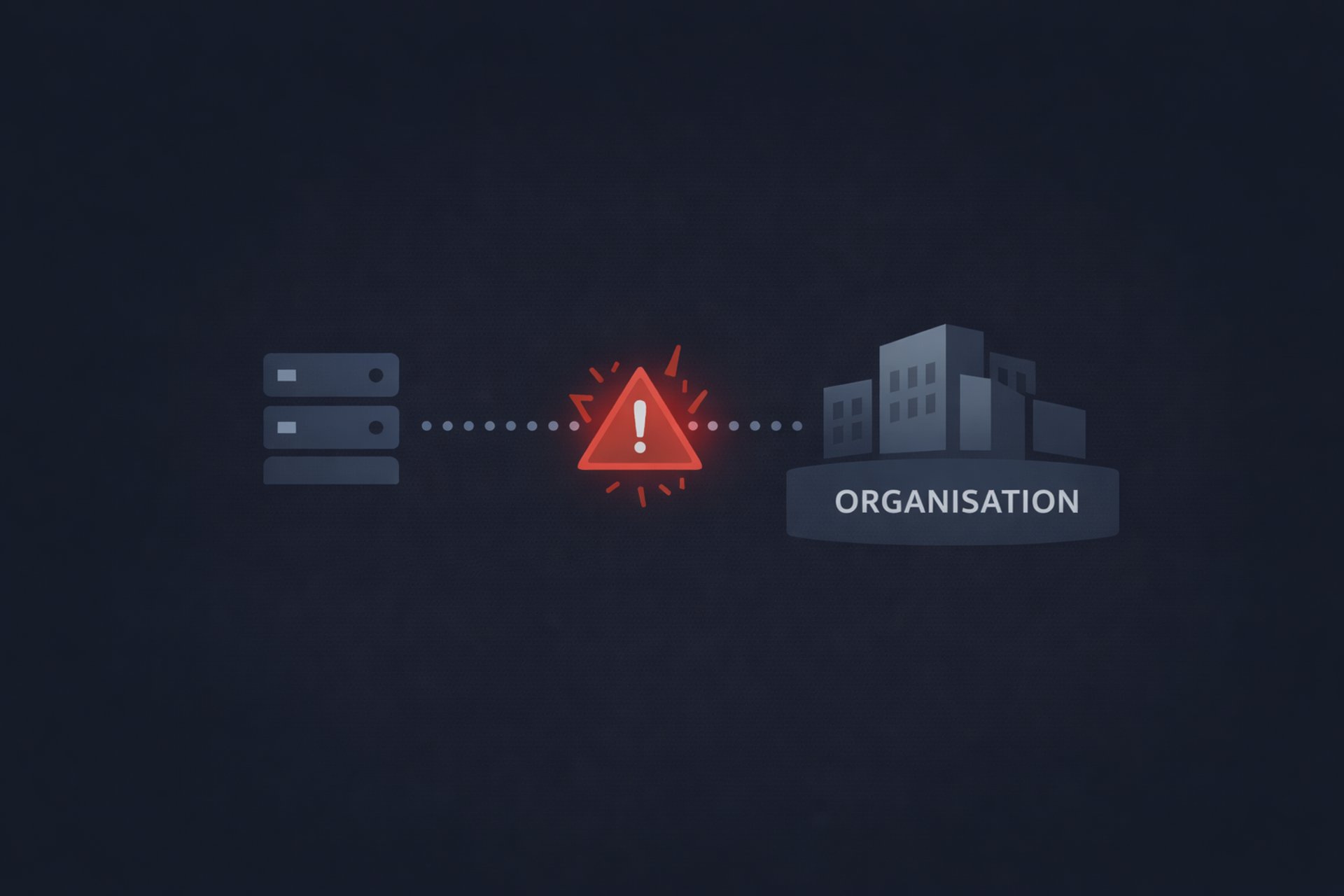
Third-Party Dependency: Governance, Accountability, and Board Oversight
A governance lens on third-party dependency, examining how accountability, assurance, and board oversight evolve as critical capability sits outside the organisation.
CYBER & TECHNOLOGY RISK
2/1/2026
Overview
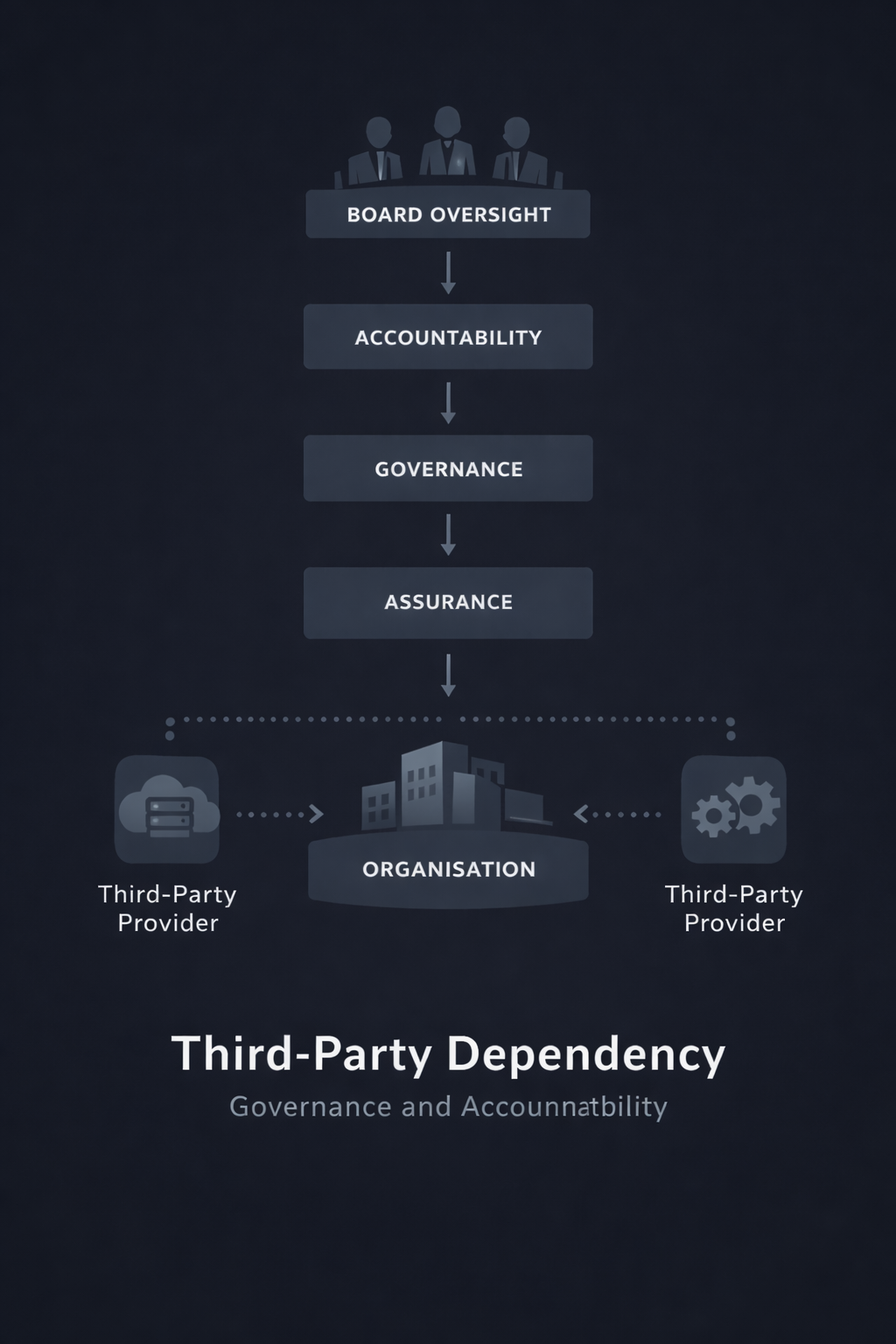
This briefing examines third-party dependency as a governance condition, rather than a discrete risk or outsourcing issue. As organisations increasingly rely on external providers for critical capability, accountability remains internal even as operational control sits outside the enterprise.
The focus here is not vendor performance, but how board oversight, assurance, and accountability expectations evolve as dependency deepens particularly when scrutiny arises.
Why this matters for boards
Reliance on third parties is now embedded in how private organisations operate. Core functions such as technology platforms, data handling, payroll, security monitoring, and service delivery are frequently managed externally, often by a small number of providers.
These arrangements are typically sound from a commercial perspective. However, they also reshape the organisation’s governance profile in ways that are not always visible through routine reporting. Where dependency is not explicitly surfaced at board level, it most often becomes apparent during insurance review, transaction diligence, regulatory inquiry, or sustained disruption. At those moments, assumptions are revisited with the benefit of hindsight.
Key governance insight
A recurring pattern is observed across sectors:
Operational control migrates outward, while accountability remains inward; When dependency is tested, organisations may find that escalation pathways are informal, recovery assumptions are optimistic, and assurance relies more on trust than evidence. This is rarely the result of poor management. It is a governance exposure that develops incrementally as dependency increases.
What this briefing explores
The full briefing examines:
Why third-party dependency is best understood as a structural governance issue
How misalignment between responsibility, authority, and assurance creates exposure
Common assumptions that weaken board confidence over time
Why private-sector organisations face particular challenges
How boards frame control versus assurance without managing vendors
The types of questions boards use to explore governance maturity
The emphasis is on patterns and governance dynamics, rather than prescriptive actions or organisation-specific guidance.
Concluding governance view
Third-party dependency is not episodic. It is a structural feature of contemporary private organisations.
Governance value emerges when dependency is made visible, accountability remains clearly aligned with authority, and confidence is shaped by evidence rather than assumption well before those arrangements are tested under scrutiny.
This page provides a concise board-level summary. A full briefing is available for download.
Board Briefing
Contact
Reach out for briefing inquiries or support
info@theboardbriefing.com
© 2025. All rights reserved.